
If you’re looking to improve your smile, teeth whitening and veneers will probably both come up in your research. They’re two of the most popular cosmetic dental treatments in the UK, but they do very different things. And if you’re considering both, the order you get them in actually matters more than most people realise.
Here’s what you need to know about each treatment, how they compare, and why the sequencing can make or break your results.
What teeth whitening actually does
Professional teeth whitening uses a peroxide-based gel to break down stain molecules trapped inside your natural tooth enamel. At a clinic, this is typically activated with an LED or laser light, and the whole process takes about an hour. You’ll walk out with teeth that are six to eight shades lighter than when you walked in.
It’s a non-invasive treatment. Nothing is removed from or added to your teeth. The gel penetrates the enamel, lifts the discolouration, and that’s it. In the UK, professional whitening is carried out by GDC-registered dentists using gels with up to 6% hydrogen peroxide, which is the legal clinical limit.
The results typically last anywhere from one to three years depending on your habits. Coffee, tea, red wine and smoking will all accelerate restaining, but touch-up treatments can extend the results without much hassle.
What veneers actually do
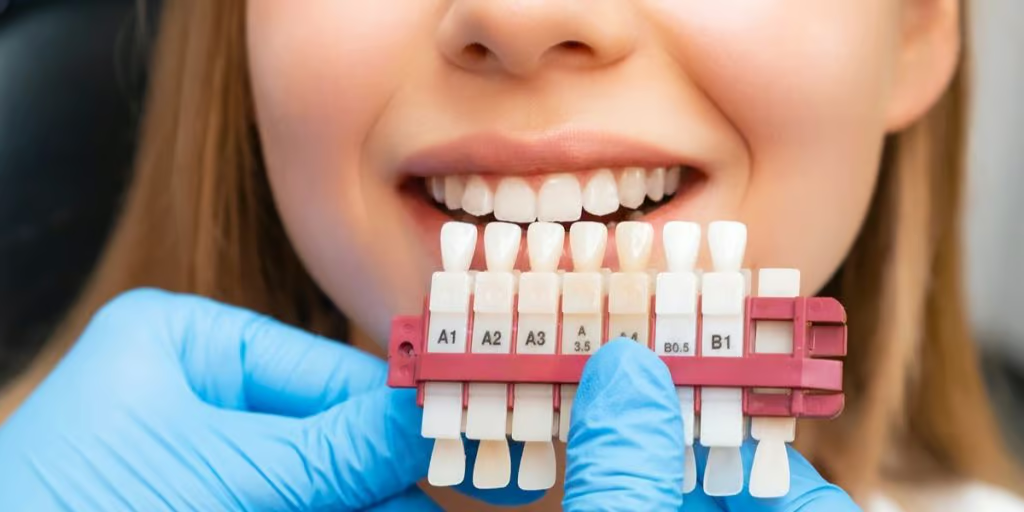
Veneers are thin shells, usually made from porcelain or composite resin, that are bonded to the front surface of your teeth. They cover what’s already there and give you full control over the colour, shape and size of each tooth.
Porcelain veneers are custom-made in a dental lab and require some enamel to be removed before they’re fitted. That makes them a permanent commitment. Once your enamel is gone, you’ll always need veneers or another restoration on those teeth. Composite veneers are applied directly and involve less preparation, but they don’t last as long and are more prone to staining over time.
A full set of veneers typically covers the six to eight front teeth that show when you smile. Porcelain veneers can last 10 to 15 years with good care, while composite veneers tend to last five to seven.
How cost compares
This is where the gap gets significant. Professional in-clinic teeth whitening in the UK generally costs between £200 and £900 for a full treatment. Porcelain veneers, on the other hand, run between £500 and £1,200 per tooth at a private practice. Composite veneers are cheaper at around £150 to £400 per tooth, but they won’t give you the same durability or stain resistance.
So if you’re treating six front teeth, you could be looking at £3,000 to £7,200 for porcelain veneers compared to a few hundred pounds for whitening. That’s a major difference, and for many people it makes the decision a practical one as much as a cosmetic one.
When whitening is the better option
If your teeth are structurally sound but have picked up surface staining from food, drink or smoking, whitening will probably give you the result you want. It’s quick, affordable, and doesn’t alter your teeth in any permanent way.
It’s also the best first step if you’re not sure how far you want to go. A professional whitening session can deliver a dramatic improvement, and you might find that’s all you need. There’s no enamel removal, no lab work, and no multi-week treatment plan. You can get it done in a single appointment and reassess from there.
Whitening won’t fix chips, gaps or misshapen teeth though. And it won’t work on crowns, veneers or fillings you already have, since those materials don’t respond to bleaching agents.
When veneers make more sense
If your concern goes beyond colour, veneers will give you more flexibility. They can correct chips, close small gaps, even out uneven edges and cover deep intrinsic staining that whitening can’t touch, like tetracycline discolouration or severe fluorosis.
Veneers are also the go-to option if you’ve got visible damage or wear on your front teeth that whitening alone won’t address. And because the shade, shape and size of each veneer is chosen during the design process, you get a level of control over the final result that whitening simply can’t offer.
That said, veneers are a bigger commitment. There’s more chair time involved, the cost is considerably higher, and porcelain veneers in particular are irreversible. So they tend to suit people who have a clear idea of what they want and are ready for a longer-term investment.
Why you should whiten before veneers
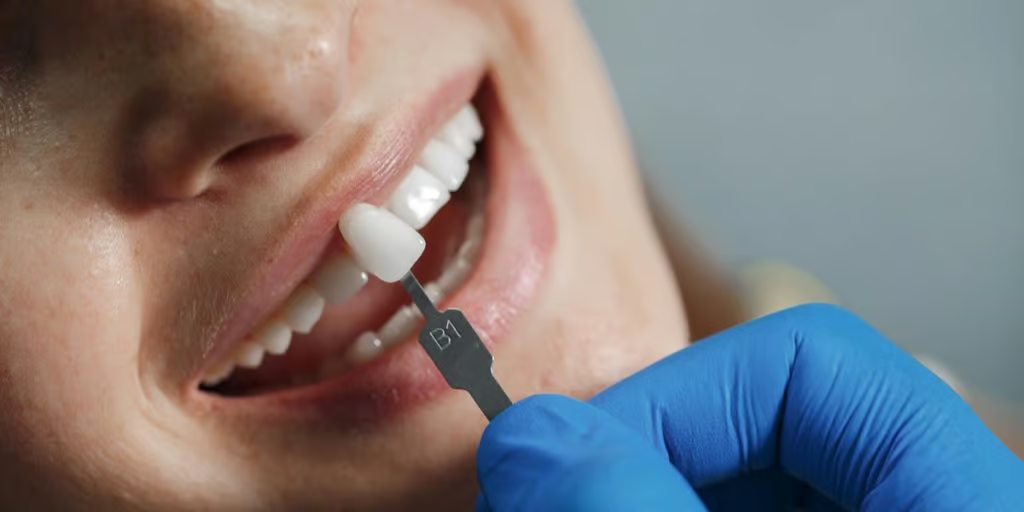
If you’re planning to get both, most dentists will recommend whitening first. The reason is simple: veneers don’t change colour once they’re placed. They’re made from non-porous materials, so bleaching agents won’t affect them.
If you whiten your natural teeth after your veneers have been fitted, those natural teeth will get lighter while the veneers stay exactly the same shade. That creates a visible mismatch that’ll only get more obvious over time. The only way to fix it is to replace the veneers entirely, which means paying for them all over again.
By whitening first, you give your dentist a brighter baseline to work with when designing your veneers. They’ll match the veneer shade to your newly whitened teeth, and the final result will look uniform and natural. Most dentists recommend waiting about two weeks after whitening before having impressions taken for veneers. This lets the shade stabilise fully so the colour match is accurate.
Talk to a dentist before you decide
Every mouth is different, and what works for one person won’t necessarily be right for another. At Harley Teeth Whitening, we offer a free consultation that will give you a clear picture of what each treatment can realistically achieve for your teeth. Your dentist will check for any underlying issues, assess the type of discolouration you have, and recommend the option, or combination of options, that’ll give you the best outcome.
The good news is that you don’t have to choose blindly. A proper assessment takes the guesswork out of it and means you’ll spend your money on the treatment that will actually deliver the result you’re after.