
If you’ve got crowns, veneers or fillings and you’re thinking about whitening, you need to know this upfront: whitening treatments only work on natural tooth enamel. Dental restorations won’t change colour, no matter what product or method you use. That doesn’t mean whitening is off the table, but it does mean you’ll want to plan things carefully.
Why restorations don’t respond to whitening
Teeth whitening works by using a peroxide-based gel that penetrates natural enamel and breaks down the stain molecules trapped inside it. Natural teeth are porous at a microscopic level, which is why they absorb different types of stain from coffee, tea and red wine over time, and it’s also why bleaching agents can get in and lift those stains back out.
Crowns, veneers, composite bonding and tooth-coloured fillings are made from synthetic materials like porcelain, ceramic or composite resin. These materials aren’t porous in the same way. The whitening gel will sit on the surface without doing anything to the colour underneath. A porcelain crown will look exactly the same after treatment as it did before, regardless of how strong the whitening gel is or how long it’s applied.
This applies equally to professional in-office whitening, take-home trays, over-the-counter strips and whitening toothpaste. No whitening product on the market can change the shade of a dental restoration.
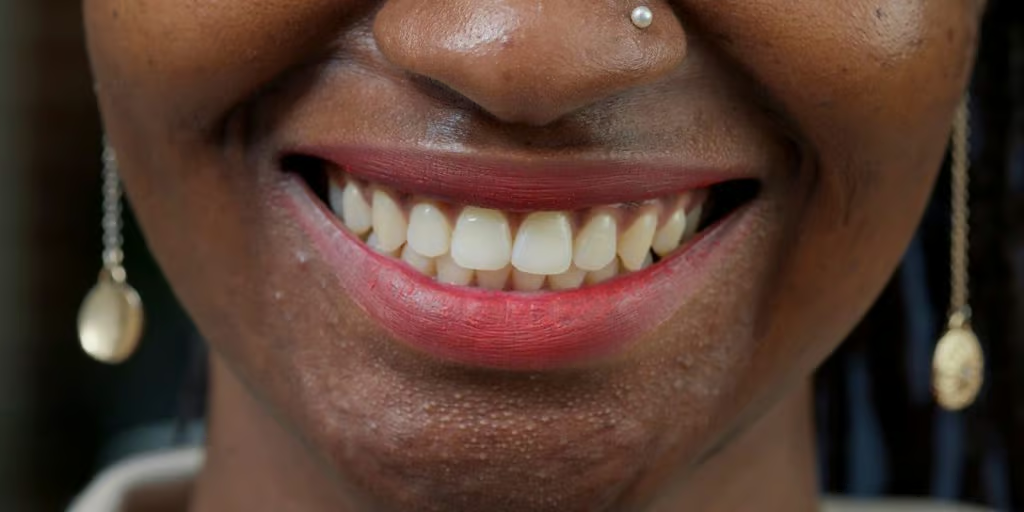
The mismatch problem
This is the practical issue most people run into. When your restorations were first placed, your dentist would have colour-matched them to your surrounding natural teeth. At the time, everything would’ve looked consistent.
If you then whiten your natural teeth, they’ll lighten by several shades while your restorations stay exactly where they were. The result is a visible colour difference, and it’s usually most obvious on the front teeth.
How much this matters depends on where the restoration is. A molar crown towards the back of your mouth probably won’t be noticeable to anyone. A composite filling or veneer on a front tooth is a different story entirely. A crown on a central incisor that blended perfectly before treatment can suddenly look noticeably yellow once the teeth around it have brightened.
How to plan teeth whitening if you’ve done dental work
The standard approach, and the one most dentists will recommend, is to whiten first and restore second. You complete your whitening treatment, wait around two weeks for the new shade to fully stabilise, and then have any visible restorations replaced to match. This way, you only pay for the replacement once, and the colour match will be accurate because it’s based on your final, settled shade.

If your existing restorations are already due for replacement on clinical grounds, this is actually ideal timing. You can combine the whitening with planned dental work and end up with a consistent result across your whole smile.
For people who have restorations that are still in good condition and don’t need replacing, the decision is more nuanced. If the restoration is on a back tooth or isn’t prominently visible when you smile, you might find the mismatch is barely noticeable.
Plenty of people whiten successfully without touching their existing dental work. It all depends on where the restorations sit and how dramatic the shade change is. If you do decide a replacement is needed, some options, like porcelain veneers, can be matched precisely to your newly whitened shade.
What about composite bonding?
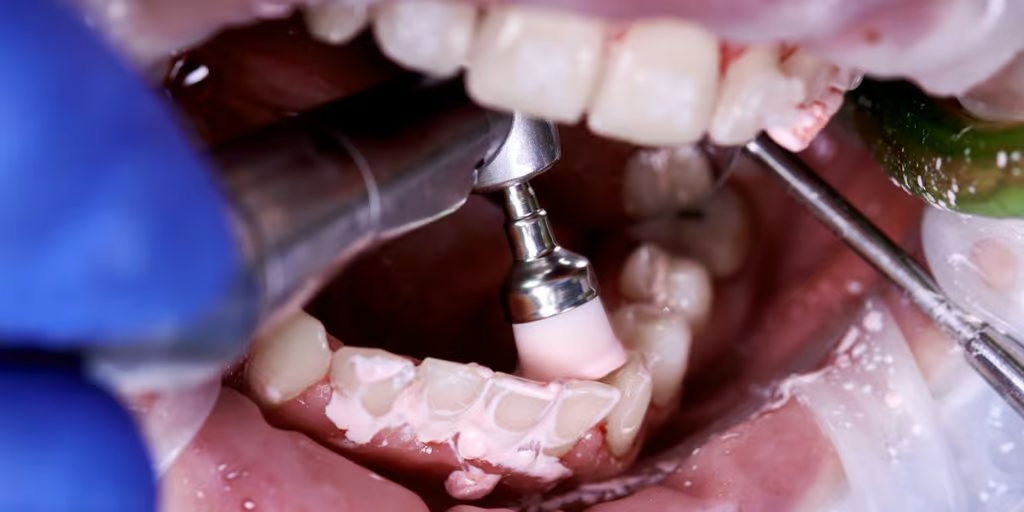
Composite resin is worth mentioning separately because it behaves a bit differently from porcelain. Like porcelain, composite won’t respond to bleaching agents. But unlike porcelain, it’s slightly porous over time and can pick up surface stains from food and drink. Your dentist can sometimes polish composite to remove that surface discolouration, which may help it blend better after whitening.
That said, if composite bonding on your front teeth has darkened noticeably over the years, polishing alone might not be enough. Replacing it after whitening is usually the most predictable way to get an even result.
What to do before you book
The simplest way to avoid any surprises is to mention your dental work during your consultation. Your dentist can map out which teeth are natural and which are restored, check how visible each restoration is, and give you an honest picture of what the result will look like.
In most cases, whitening is still absolutely worth doing even if you have restorations. The key is to go in with a plan. Knowing in advance that your crown or filling won’t change colour means you can make an informed decision about whether to replace it afterwards or leave it as it is.
Not sure how whitening will work with your dental restorations? Book a free consultation at Harley Teeth Whitening and we’ll assess your situation before you commit to anything.