
It’s one of the most common questions people have before booking a teeth whitening appointment, and it’s completely fair to ask. You’re sitting in a dental chair with a chemical gel on your teeth and a light pointed at your mouth for an hour. What does that actually feel like? Is it painful? Will you be gripping the armrests?
The honest answer is that most people find it surprisingly uneventful. But “pain-free” doesn’t tell you the whole story, so here’s a proper breakdown of what you’ll feel at each stage.
What you’ll feel at each stage
Step 1: The consultation and setup
The first thing your dentist will do is check your teeth and gums. They’ll look for any cavities, cracks or gum issues that could cause problems during treatment. If everything checks out, they’ll place a protective barrier over your gums to keep the whitening gel away from the soft tissue. You might feel a slight pressure as this is applied, but nothing uncomfortable.
At this point there’s nothing to feel at all, really. You’re just sitting in the chair with your mouth open.
Step 2: The gel goes on
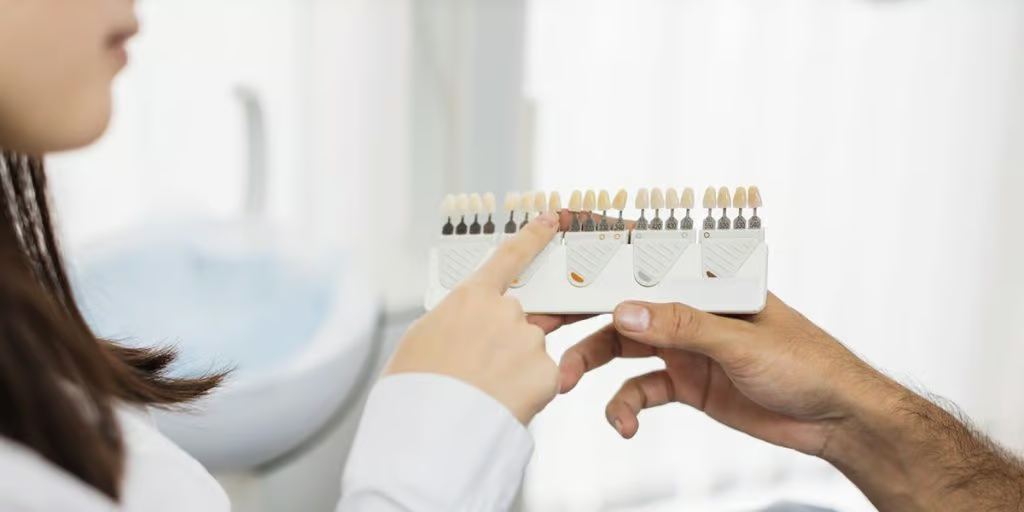
The gel itself is a peroxide-based formula, usually containing up to 6% hydrogen peroxide for in-clinic treatments in the UK. When it first goes on, most people don’t feel much. The gel is cool and has a slightly chemical taste, but it’s not unpleasant. Some people notice a faint tingling within the first few minutes as the peroxide starts to interact with the enamel. Others feel nothing at all.
That tingling, if it happens, is the peroxide beginning to penetrate the enamel and break down the stain molecules inside your teeth. The enamel itself has no nerve supply, so any sensation at this stage is mild and surface-level. It’s a normal part of the process and doesn’t mean anything is going wrong.

Step 3: The LED light activation
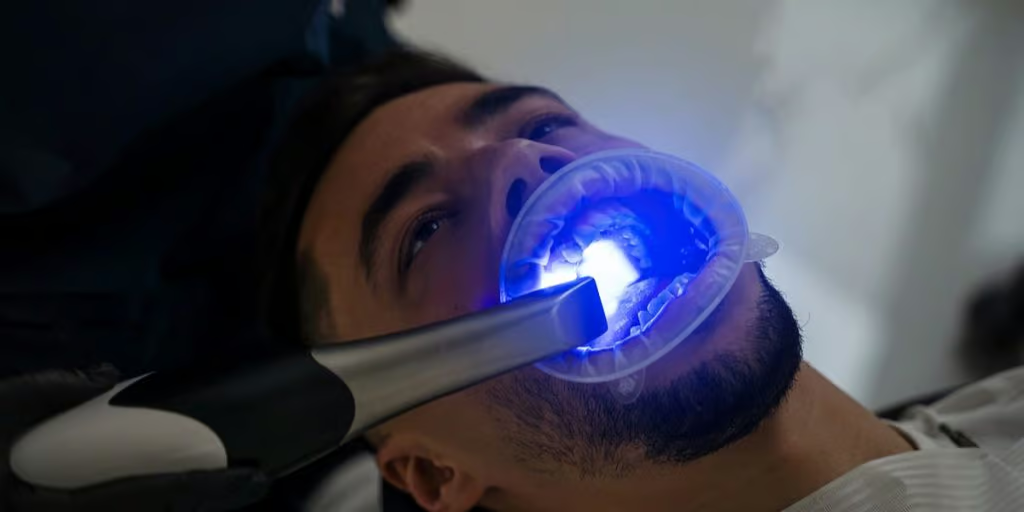
Once the gel is in place, an LED light is positioned in front of your teeth to activate the whitening agent. The light itself doesn’t produce heat in the way you might expect. Modern Blue Spectrum LED systems run at wavelengths designed to activate the gel without generating excessive warmth, so you won’t feel any burning or discomfort from the light.
The treatment is done in cycles, typically two or three rounds of 15 to 20 minutes each. Between rounds, the dentist will wipe off the used gel and apply a fresh layer. During each cycle, you’ll just be sitting still with your mouth open. Most people listen to music, scroll their phone or simply zone out. It’s genuinely boring in the best possible way.
If you do feel anything during the light cycles, it’ll typically be an occasional short, sharp “zing.” Think of it like a tiny electric twinge that lasts a second or two and then disappears. Not everyone gets these, and when they do happen they’re mild and temporary. They’re caused by the peroxide reaching the dentine layer beneath your enamel, where tiny tubules carry the sensation directly to the nerve inside the tooth.
Step 4: After the session
During the treatment itself, the majority of patients feel little to no discomfort. The sensitivity people talk about usually kicks in afterwards, within the first few hours to 24 hours post-treatment.
When it does occur, it typically presents as a heightened reaction to temperature. A sip of cold water might produce a brief, sharp sensation. Cold air hitting your teeth when you breathe might feel more noticeable than usual. Some people describe it as a mild aching or a fleeting zing. Think of it as a reminder that your teeth have just been through a chemical process and need a bit of time to settle, not a deep, throbbing pain.
This happens because the whitening gel temporarily opens up microscopic pores in your enamel, making the dentine underneath slightly more exposed than usual. Your saliva will naturally remineralise those pores over the next day or two, and the sensitivity fades as that happens. For most people, any sensitivity will resolve within a couple of days. In some cases it can linger for up to a week, but it’ll fade gradually and rarely needs anything more than a bit of patience.

Who tends to feel more sensitivity
Not everyone experiences teeth whitening the same way. If you already have sensitive teeth in daily life, whether from thinner enamel, receding gums or just natural predisposition, you’re more likely to notice sensitivity during and after treatment. Your dentist will check for this during the initial consultation and can adjust the treatment accordingly, either by using a lower concentration of gel or shorter application cycles.
People with small cracks, chips or untreated decay in their teeth are also more likely to feel discomfort, because those areas give the peroxide a direct route to the inner layers of the tooth. That’s why the pre-treatment check matters. A good dentist won’t proceed until they’ve ruled out anything that could turn a comfortable session into a painful one.
How to reduce any discomfort
If you’re concerned about sensitivity, there are a few practical things you can do. Using a desensitising toothpaste for a week or two before your appointment will help build up a protective layer over exposed dentine. Avoiding very hot or cold food and drink for the first 48 hours after treatment will give your enamel time to reseal without being stressed by temperature extremes.
After treatment, stick to lukewarm drinks and soft foods for the first day. If you do get any sensitivity, it’ll typically respond well to over-the-counter painkillers like ibuprofen. But most people find they don’t need anything at all.

What it feels like to see the results
The bit nobody warns you about is how good it feels to look in the mirror straight afterwards. The treatment takes about an hour, and you’ll typically see an improvement of six to eight shades. That’s a visible, obvious difference you’ll notice immediately. Whatever mild tingling or brief sensitivity you might experience during the session tends to be forgotten pretty quickly once you see the result.
If you’re still unsure, a free consultation at Harley Teeth Whitening will give us a chance to assess your teeth, answer your specific questions and tell you exactly what to expect based on your individual situation. No surprises, no ambiguity.