
It’s one of the most common questions people have before booking a teeth whitening appointment, and it’s completely fair to ask. You’re sitting in a chair, someone applies a chemical agent to your teeth and shines a light on them.
What does that actually feel like? The honest answer is that most people are surprised by how little there is to report. But it’s worth knowing the full picture so you can go in with realistic expectations.
What happens during the treatment
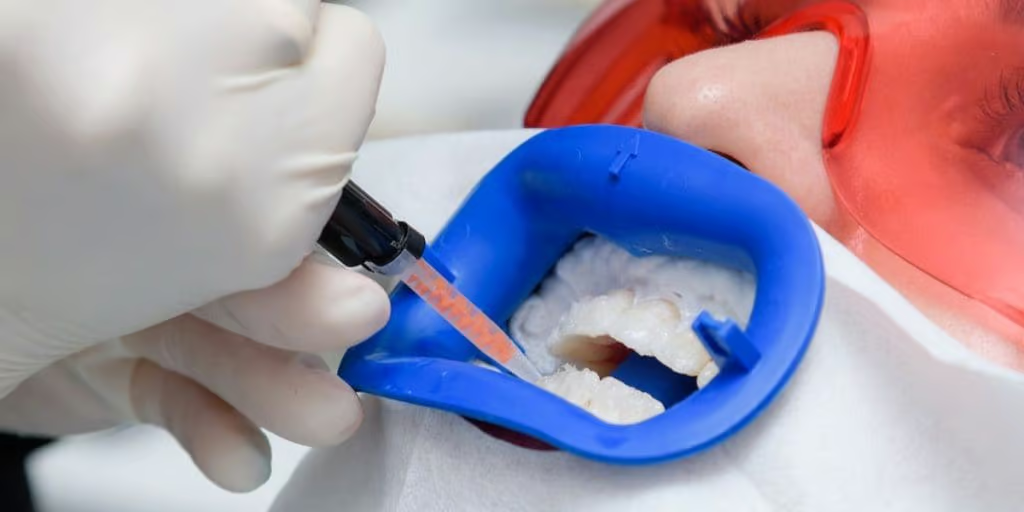
Professional teeth whitening typically involves a whitening gel being applied directly to your teeth. In LED-assisted treatments, a light source is then used to activate the gel and speed up the process.
You’ll usually have a cheek retractor in place to keep your lips clear of your teeth, and your gums will be protected with a barrier. The whole thing takes around 60 minutes, and you’ll be reclined in the chair for most of it. There’s no drilling, no injections and no anaesthetic needed.
How the gel feels on your teeth
When the whitening gel is first applied, most people don’t feel anything at all. The gel itself is cool and has a slightly chemical taste if any gets near your tongue, but that’s about it. There’s no burning, no stinging and no pressure.
As the treatment progresses, some people start to notice a mild tingling or a slight zing on certain teeth. This is sometimes described as tiny pinprick sensations, and it tends to come and go in waves. It’s not painful for the vast majority of patients, but it’s noticeable enough that you’ll be aware something is happening. Think of it as a faint, occasional twinge.
If you’ve ever bitten into ice cream and felt a quick flash of cold on a particular tooth, the sensation during whitening can be similar in nature, though usually milder.
Does professional teeth whitening hurt?
No, teeth whitening doesn’t hurt. Professional teeth whitening carried out by a qualified dentist is designed to be pain-free, and modern gels are formulated to minimise discomfort.
That said, everyone’s teeth are different. People with naturally thinner enamel or pre-existing sensitivity may feel more during the session than someone with no sensitivity history at all.
If you do feel anything uncomfortable, it’s worth telling your dentist straight away. They can adjust the concentration of the gel, shorten the exposure cycles or apply a desensitising agent. You won’t be expected to sit through anything that doesn’t feel right.
Sensitivity after the treatment
This is where most people notice the biggest difference. In the hours following a whitening session, it’s common to experience some degree of tooth sensitivity. For some, it’s barely there. For others, it can feel like sharp, shooting twinges that come and go, particularly when drinking something cold or breathing in cold air.
This post-treatment sensitivity is temporary. It usually peaks within the first 12 to 24 hours and fades within 48 hours for most people. Your dentist may recommend using a sensitive toothpaste in the days leading up to and following your appointment, and avoiding very hot or cold food and drink in the first couple of days will help too.
It’s also normal for your gums to feel slightly irritated if any whitening gel has come into contact with the soft tissue. This typically settles within a day.
You can find more detail on what to do afterwards in this aftercare advice guide.
What about take-home trays?
If you’re using custom take-home whitening trays provided by your dentist, the experience will be a bit different. The gel concentration is usually much lower, so you’ll wear the trays for a longer period, often 30 minutes to an hour per day over a couple of weeks.
The sensations are similar but tend to be milder. You might notice a low-level sensitivity building gradually over the course of the treatment. If it becomes too much, you can take a day off and let your teeth recover before continuing.
Will you notice a difference straight away after the teeth whitening treatment?
Yes, in most cases you’ll see a visible difference immediately after a professional session. Your teeth will look noticeably lighter, and the full effect typically settles in over the following 24 to 48 hours. Results will vary depending on the type of staining you have and your natural tooth colour.

Who should be cautious?
If you have untreated cavities, cracked teeth or gum disease, whitening may cause more discomfort than usual. That’s why a consultation before treatment is important. A good dentist will check for any underlying issues and let you know whether whitening is suitable for you right now.
Pregnant or breastfeeding women are generally advised to wait, as there’s not enough research to confirm it’s completely safe during that time.
If you’d like to know how to get ready beforehand, this guide on how to prepare for your teeth whitening appointment covers everything step by step.
In a nutshell
Teeth whitening is one of the mildest cosmetic dental treatments you can have. Most people describe the experience as completely painless during the session itself, with some temporary sensitivity afterwards that clears up within a day or two.
So, if you’ve been putting it off because you’re worried about discomfort, the reality is usually far less dramatic than you’d expect.