
If you’re considering teeth whitening, you’ve probably got one big question: how white will they actually end up? The answer depends on a few things, and it’s worth knowing what shapes your results before you book. Professional whitening can make a real difference, but “Hollywood white” isn’t always realistic, and that’s not a bad thing.
Your starting shade matters most
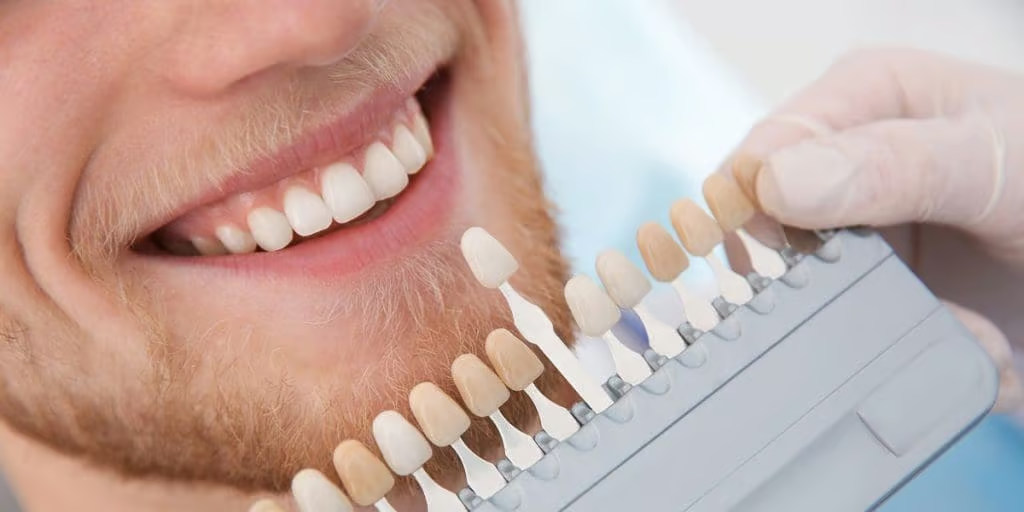
The single biggest factor in how white your teeth will be after treatment is where they start. Dentists measure tooth colour using a standardised shade guide with 16 shades, ranging from light to dark. Most people sit somewhere in the middle of that range.
Professional whitening will typically lighten teeth by around six to eight shades in a single session. So if you’re starting with noticeably yellow or stained teeth, you’ll see a dramatic improvement. If your teeth are already fairly light, the change will be more subtle, but still visible.
It’s worth keeping in mind that your natural baseline is determined by genetics. Some people are born with thicker enamel, which appears whiter, while others have thinner enamel that lets the yellowish dentine underneath show through more. Whitening can’t change that underlying structure, but it can remove the accumulated staining that sits on top of it.
Different types of staining respond differently
Not all discolouration reacts the same way to whitening treatment.
Surface stains
Surface stains from tea, coffee, red wine and tobacco tend to respond very well. These are extrinsic stains, and they’re exactly what professional whitening is designed to tackle. Most people with this kind of staining will see the biggest improvements.
Intrinsic stains
Intrinsic staining is a different matter. This is discolouration that sits within the tooth itself, sometimes caused by certain medications taken during childhood, excess fluoride or trauma to the tooth. Whitening can still help in these cases, but the results may be less dramatic, and your dentist will be upfront about what’s achievable.
Age-related yellowing
Age-related yellowing falls somewhere in between. As enamel wears down over the years, teeth naturally take on a warmer tone. Whitening will address this effectively, though the improvement may be slightly less pronounced than it would be for a younger patient with the same starting shade.
What does “white” actually look like?
There’s a common misconception that teeth whitening will give you the kind of bright, uniform white you see on TV. In reality, the best results look natural. Your teeth will be noticeably brighter and cleaner, but they’ll still look like your teeth.
A good professional result means your teeth are at their best possible version. They won’t look artificial or flat white. The lightest natural shade on the standard guide is often described as a bright, clean white with a hint of warmth to it. That’s typically the ceiling for natural tooth whitening, and most people are genuinely pleased with how it looks.
If you’re after something beyond that, options like veneers can achieve a more uniform, ultra-white appearance, but that’s a different type of treatment entirely.

Dental work won’t change colour
One thing that catches people off guard is that whitening only works on natural tooth enamel. If you’ve got crowns, fillings or bonding on your front teeth, those will stay the same shade while your natural teeth lighten around them. This can create a mismatch that’s worth thinking about before you go ahead.
A consultation beforehand will flag this. Your dentist can show you how your existing dental work might look against your newly whitened teeth and help you decide whether any adjustments would be needed afterwards.
How long will the results last?
You won’t stay at your whitest permanently. Over time, everyday exposure to food, drink and general wear will gradually bring some colour back. For most people, professional results last around 18 to 24 months before a top-up is worth considering.
How quickly your teeth pick up new staining depends largely on your habits. Regular coffee and red wine drinkers will notice fading sooner than someone who mostly drinks water. Good oral hygiene and following aftercare advice in the first 48 hours after treatment will help you hold onto your results for longer.

A consultation will tell you what to expect
This is one of the most useful parts of the process. During a professional consultation, a dentist will take a shade sample of your current tooth colour and compare it against the guide to show you the likely outcome. You’ll be able to see, before anything happens, roughly how white your teeth will be after treatment. That way, there will be no surprises and no guessing.
If you’re curious about what your teeth could look like, booking a free consultation at our clinic is the most reliable way to find out.