Charcoal toothpaste has been one of the most hyped dental trends of the last few years. Open any social media app and you’ll find influencers brushing their teeth with jet-black toothpaste, promising a brighter smile in days.
The marketing sounds convincing, and the “activated charcoal” label gives it a natural, almost medical feel. But does charcoal toothpaste actually whiten your teeth? And could it be doing more harm than good? Let’s find out…
What is charcoal toothpaste, and how does it work?
Activated charcoal is a fine black powder made by heating carbon-rich materials like coconut shells or wood at extremely high temperatures. This creates a porous structure that can trap and absorb certain substances, which is why it’s been used in hospital emergency departments to treat specific types of poisoning.

The idea behind charcoal toothpaste is that this absorbing ability will lift stains from tooth enamel. On top of that, the gritty texture acts as a mild abrasive, physically scrubbing surface discolouration away. It sounds logical, and it’s easy to see why so many people have been drawn to it.
What does the research actually say?
Here’s where it gets less convincing. Multiple studies have now looked at whether charcoal toothpaste delivers on its whitening promises, and the results are pretty consistent.
A 2024 randomised clinical trial published in the Journal of Dentistry compared activated charcoal toothpaste and charcoal powder against 10% carbamide peroxide (a standard whitening agent used by dentists).
The charcoal products didn’t produce any meaningful whitening beyond what a regular fluoride toothpaste achieved. The researchers concluded that the use of charcoal-based products should be discouraged based on their whitening performance and patient satisfaction.
A separate in vitro study published in 2025 found that while charcoal toothpaste showed some shade improvement over 30 days, a single five-minute application of a 6% hydrogen peroxide pen produced comparable or better results.
And a 2026 review in the Journal of Prosthodontic Research confirmed that charcoal-based toothpastes tend to increase surface roughness due to their abrasive nature.
The pattern across the evidence is clear. Charcoal toothpaste may remove some surface staining, but it doesn’t perform any better than standard whitening toothpaste, and it falls well short of professional whitening treatments. If you’re looking at the full range of teeth whitening options, charcoal sits towards the bottom of the list for effectiveness.
The enamel problem
This is where the real concern lies. Charcoal toothpaste works primarily through abrasion, and that abrasion comes at a cost. Your tooth enamel is the hardest substance in your body, but it doesn’t grow back once it’s worn away. As we’ve established above, several studies have found that charcoal toothpastes significantly increase the surface roughness of enamel, and rougher enamel is more prone to picking up new stains and harbouring bacteria.

There’s also a slightly ironic twist. If you use charcoal toothpaste regularly, you may notice your teeth looking whiter at first as surface stains are scrubbed off. But over time, as the enamel thins, the yellower dentine layer underneath starts to show through. Your teeth can actually end up looking more discoloured than before you started, which is the opposite of what you were going for.
It’s worth pointing out that many charcoal toothpastes don’t contain fluoride either. Fluoride strengthens enamel and helps prevent decay, so switching to a non-fluoride charcoal paste means you’re trading genuine dental protection for an unproven whitening claim. This is one of the key differences between professional whitening carried out by a dentist and DIY products bought off the shelf.
Why charcoal can’t tackle deeper stains
There are three types of tooth stains. Today, we’ll look at the two main ones:
- Extrinsic stains sit on the surface of the enamel and are caused by things like coffee, tea, red wine, and tobacco.
- Intrinsic stains come from within the tooth itself and can be caused by ageing, certain medications, or trauma.
Charcoal toothpaste can only work on extrinsic stains, and even then, it doesn’t do the job particularly well compared to other options. It has no ability to change the intrinsic colour of your teeth because it doesn’t contain a bleaching agent. Professional whitening treatments use hydrogen peroxide or carbamide peroxide, which penetrate the enamel to break down staining compounds at a deeper level.
If you’ve already invested in professional whitening and want to maintain your results, charcoal toothpaste isn’t the way to do it. In fact, many dental professionals actively advise against whitening toothpastes after treatment because the abrasive particles can wear down freshly treated enamel.
What actually works for whiter teeth
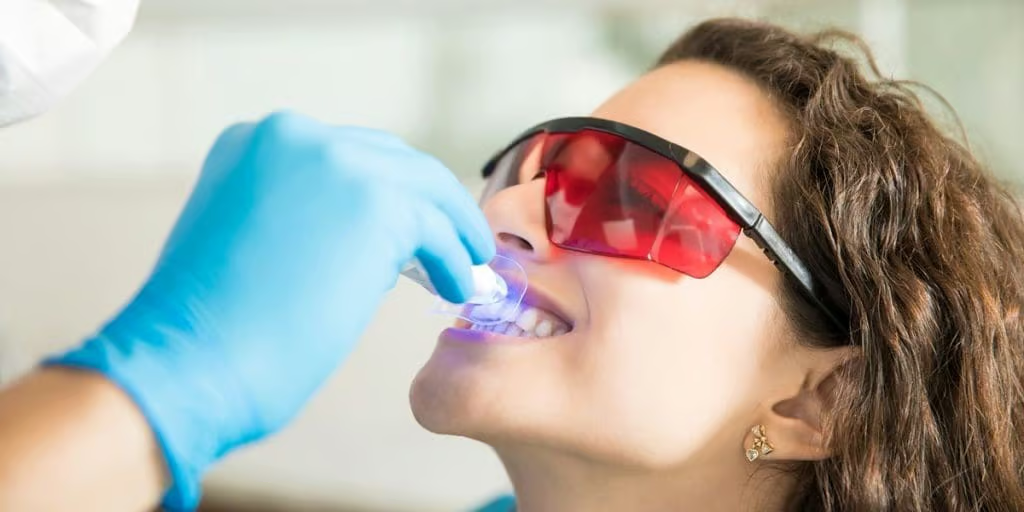
If you want visible, lasting results, professional teeth whitening remains the most effective and safest option. In-clinic treatments use higher concentrations of whitening agents applied under controlled conditions by a qualified dentist, with results that are immediate, consistent, and far more dramatic than anything a toothpaste can deliver.
For those who aren’t ready for professional treatment, a standard fluoride toothpaste will keep your teeth clean and protected without the risks that come with charcoal. Brushing twice a day, flossing, and cutting back on staining food and drink will all make a genuine difference over time. If you’re weighing up clinic treatments against at-home products, it’s worth reading about the real gap between professional whitening and take-home kits.
The verdict
Charcoal toothpaste is a trend that looks good on camera but ultimately, doesn’t hold up under scrutiny. The evidence shows that it doesn’t whiten teeth any better than regular toothpaste, it can damage enamel with prolonged use, and it often lacks fluoride. For anyone serious about a whiter smile, there are better and safer routes to get there. Book a consultation at Harley Teeth Whitening and let’s see which route works best for you.