
Oil pulling has had a serious moment over the last few years. Scroll through any wellness corner of social media and you’ll find people swishing coconut oil around their mouths every morning, claiming it whitens their teeth, freshens their breath and detoxes their entire body. It sounds appealing, especially when the price of entry is a jar of coconut oil from your kitchen cupboard.
But does it actually work? And more specifically, can oil pulling genuinely whiten your teeth? Here’s what the evidence says.
What oil pulling is and how it works
Oil pulling is an ancient Ayurvedic practice that involves swishing a tablespoon of oil, usually coconut, sesame or sunflower, around your mouth for 15 to 20 minutes before spitting it out. The idea is that the oil “pulls” bacteria and toxins from your teeth and gums as you swish.
There’s some truth to the bacterial part. When you swish oil around your mouth for that long, it does physically dislodge some of the plaque and bacteria sitting on the surface of your teeth. Coconut oil in particular contains lauric acid, which has antimicrobial properties. A systematic review published in Heliyon found that coconut oil pulling had a measurable effect on plaque levels and salivary bacterial counts across several randomised controlled trials.
So oil pulling can contribute to general oral hygiene. That part isn’t really in dispute.

What the research says about whitening
This is where the claims start to fall apart. When it comes to actual teeth whitening, there’s no credible scientific evidence that oil pulling works.
A 2016 study published in the Journal of Advanced Oral Research tested coconut, sesame and sunflower oils against hydrogen peroxide and saline on extracted human teeth. The conclusion was clear: none of the oils had any measurable whitening effect. The hydrogen peroxide group showed visible lightening. The oil groups didn’t.
The American Dental Association has also weighed in, stating that there are no reliable scientific studies to show that oil pulling whitens teeth. And it’s not hard to understand why. Teeth whitening requires a chemical reaction. Peroxide-based agents penetrate the enamel and break down the stain molecules trapped inside it. Oil can’t do that. It doesn’t contain any bleaching agent and it can’t penetrate enamel. At most, it might help dislodge a thin layer of surface plaque, which could make teeth look marginally cleaner, but that’s a long way from genuine whitening.
Why it looks like it works for some people
If you’ve seen before-and-after photos from oil pulling fans, you might wonder why they seem to show results. There are a couple of explanations.
- First, removing surface plaque can make teeth appear slightly brighter. If someone hasn’t been brushing thoroughly and then starts oil pulling daily, the mechanical action of 20 minutes of swishing will clear some of the buildup that was dulling their teeth. That’s not whitening though. That’s cleaning. A session with a dental hygienist would do the same thing far more effectively and in less time.
- Second, perception plays a big role. If you’ve committed to a new daily routine and you’re paying close attention to your teeth, you’re more likely to notice any improvement, however minor. Lighting, camera angles and expectation bias all contribute to the apparent results you see on social media.
- And third, they might just be getting a regular whitening treatment and lying. We all know it wouldn’t be unheard of on the internet.

What oil pulling can actually do for your oral health
Let’s give it fair credit where it’s earned. Oil pulling does appear to have some genuine oral health benefits, even if whitening isn’t one of them.
Multiple studies have found that regular oil pulling with coconut oil can reduce plaque buildup and lower levels of Streptococcus mutans, one of the key bacteria responsible for tooth decay. Some research has also shown it can help reduce symptoms of gingivitis, including gum inflammation and bleeding.
A 2025 randomised clinical trial published in Clinical Oral Investigations found that coconut oil pulling produced anti-inflammatory benefits comparable to chlorhexidine mouthwash in patients with periodontal issues. That’s a meaningful finding. And because oil pulling doesn’t carry the same side effects as chlorhexidine, like staining and taste disruption, it could serve as a useful addition to a daily oral hygiene routine.
The key word there is “addition.” Oil pulling shouldn’t replace brushing, flossing or regular dental check-ups. But alongside those habits, it may offer a modest benefit for keeping your mouth healthy.
How professional whitening compares
If your goal is genuinely whiter teeth, oil pulling and professional whitening aren’t in the same category.
Professional in-clinic whitening uses a peroxide-based gel that penetrates the enamel and breaks down discolouration at a molecular level. It’s activated by an LED or laser light, and the entire treatment takes about an hour. Most patients will see an improvement of six to eight shades in a single session, with results that can last one to three years depending on aftercare and lifestyle.
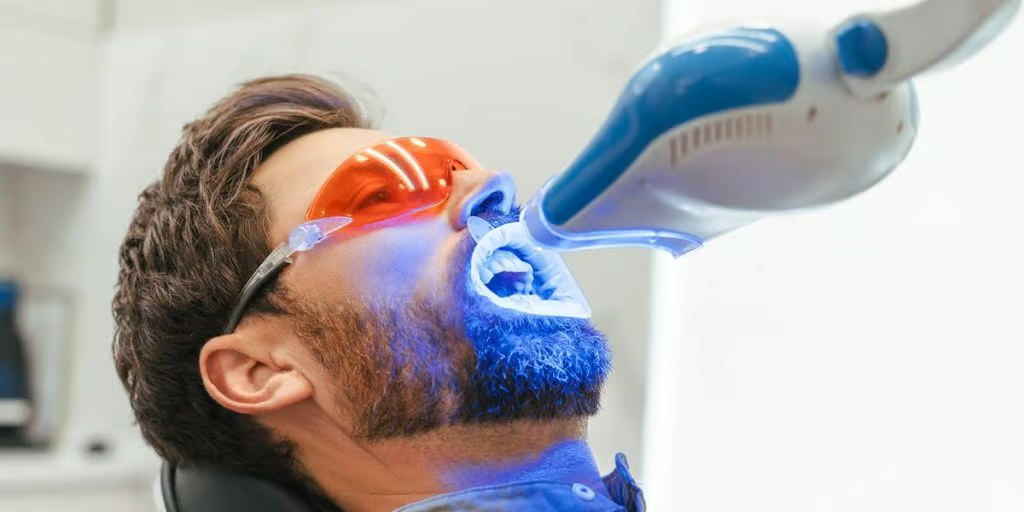
That’s a fundamentally different outcome to anything oil pulling can offer. Swishing coconut oil for 20 minutes every morning for weeks or months won’t produce anything close to the same result, because the mechanism simply isn’t there. Oil can’t bleach enamel. Peroxide can.
So should you bother with oil pulling?
If you enjoy it as part of your morning routine and you find it leaves your mouth feeling fresh, there’s no strong reason to stop. It’s unlikely to cause harm as long as you’re still brushing twice daily and seeing your dentist regularly. Some people find it a pleasant complement to their oral care routine, and the plaque and bacteria reduction, while modest, is real.
But if whiter teeth are what you’re after, oil pulling won’t get you there. A proper whitening treatment will.